Pultrusion is a continuous manufacturing process for composite profiles with a constant cross-section. Glass fibres and resin are combined, shaped and cured into a profile that is cut to length. These profiles become building blocks for handrails, walkways, load-bearing structures and pultruded grating.
What is pultrusion?
The name combines “pull” and “extrusion”. The distinction is how the material moves through the tooling: pultrusion pulls the reinforcement through the process, whereas extrusion pushes material through an opening. The profile retains the same cross-section throughout its length, such as an I-section, an angle or a square tube.
Glass fibres provide strength and stiffness. The resin, the polymer surrounding the fibres, binds them together and transfers loads between them. Fibre type, fibre orientation and resin system determine the properties of the finished profile.
How the process works
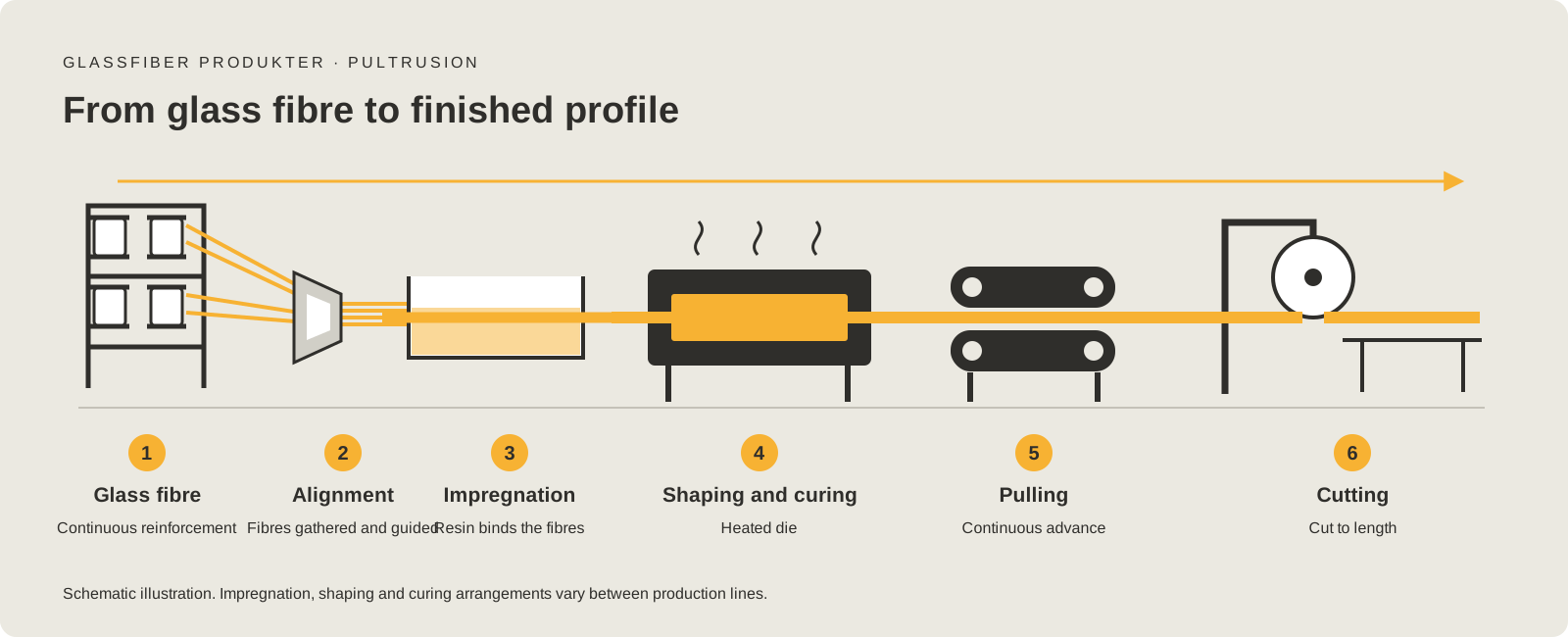
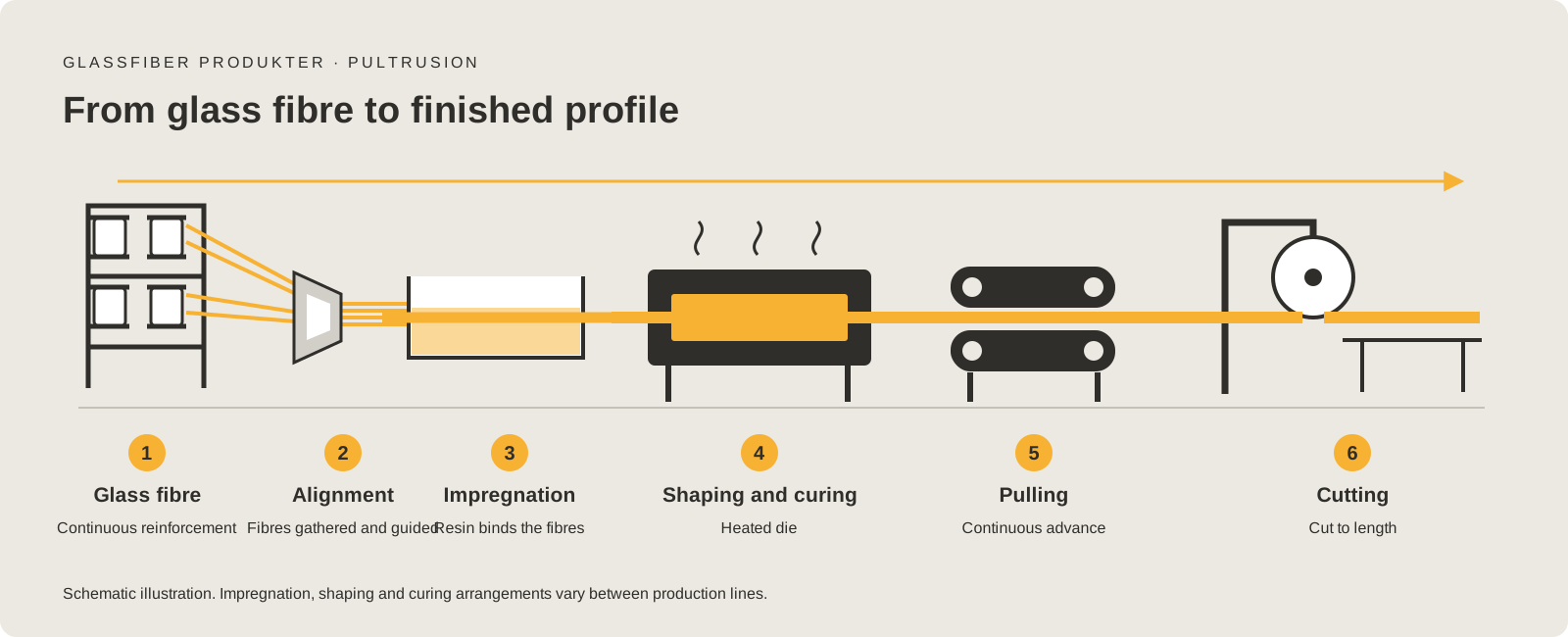
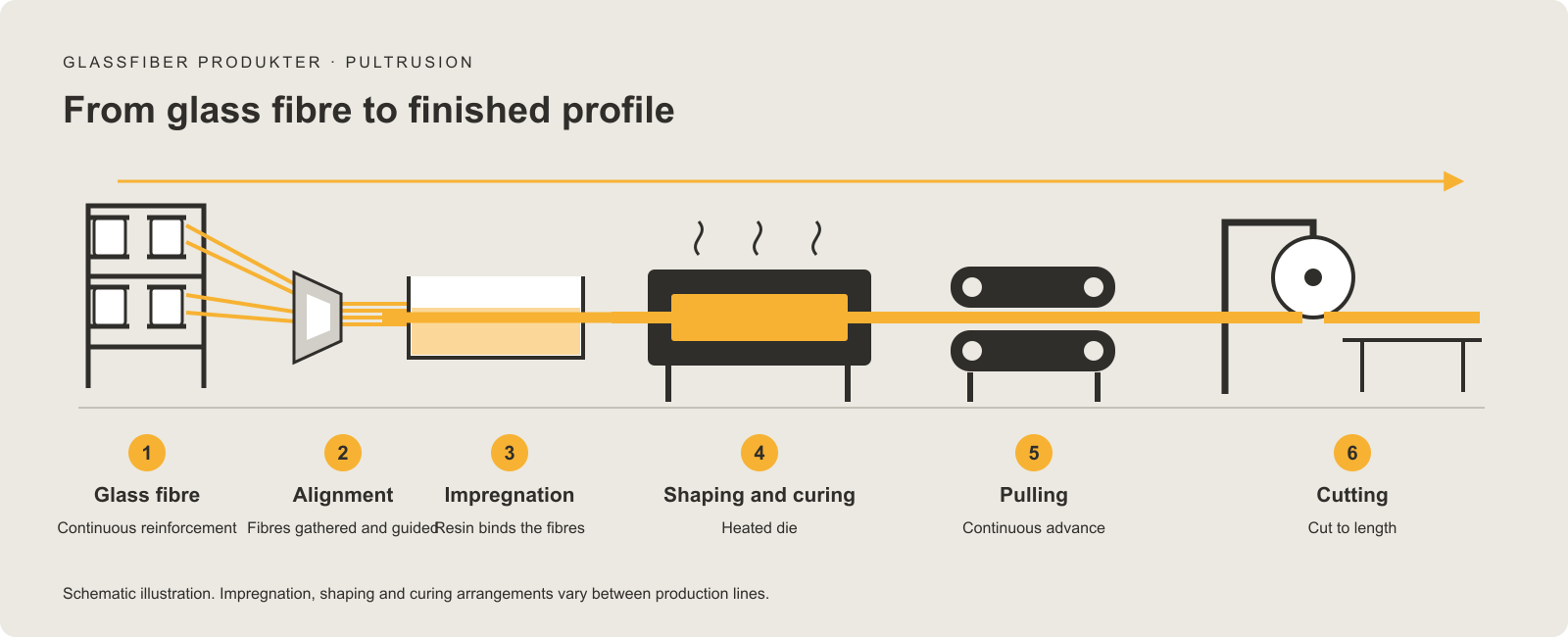
Glass fibre is fed into the line
Continuous bundles of glass fibres, often called rovings, are drawn from spools. Mats, fabrics or surface veils may be added to achieve the required reinforcement arrangement and surface finish.
The fibres are aligned and gathered
Guides position the reinforcement and gather it towards the required profile shape. Even fibre distribution and controlled feeding help maintain a stable process.
The reinforcement is impregnated
The fibres are wetted with resin in a bath or a closed impregnation system. The resin and any additives are selected to suit the chemical environment and functional requirements.
The profile is shaped and cured
The impregnated reinforcement is pulled into a heated die. The die defines the cross-section, while heat and residence time allow the thermosetting resin to react and the profile to become solid.
The pulling unit keeps the line moving
A pulling unit grips the cured profile and draws the material continuously through the line. Pulling speed and temperature must be matched to each other and to the material.
The profile is cut to length
After the pulling unit, the profile is cut into the required lengths. The profiles can then be fabricated and assembled into components or complete solutions.
Benefits of pultruded glass fibre profiles
Their properties make these profiles relevant in demanding environments. The benefits should be assessed for the specific profile and application:
- Low weight. Low self-weight can simplify handling and installation and reduce the dead load of a structure.
- High strength relative to weight. Continuous reinforcement makes effective use of the fibres, particularly along the length of the profile.
- Corrosion resistance. Glass fibre composites do not rust like steel. The resin system is selected for the chemicals, concentrations, temperatures and exposure involved.
- Long service life with low maintenance. Appropriate material selection and detailing can reduce corrosion-related maintenance. Inspection and cleaning should reflect the application.
- Electrical insulation. Suitable glass fibre and resin systems can provide electrically insulating profiles. Insulation requirements must be verified for the intended application and environment.
- Repeatable quality. Controlled fibre feeding, temperature and pulling speed support consistent geometry and material properties.
From profile to complete solution
At Glassfiber Produkter, we connect material selection with the function of the finished solution. Structural profiles can be used in frames, supports and other load-bearing applications. With suitable connections and other components, they can form walkways, platforms, handrails, stairs and access systems.
Pultruded grating
Pultruded grating combines separate load-bearing profiles with transverse connections. This differs from moulded grating, where the grid is formed together in a mould. Span direction, loading, openings and surface finish are important considerations when selecting grating for an application.
Typical applications include industry, water and wastewater, aquaculture, infrastructure and electrical installations. The requirement may be a single profile or an assembly drawn from our construction systems.
When is pultrusion a good choice?
The process is especially relevant when a constant cross-section suits the application and low weight, corrosion resistance or insulating properties are important. Standard profiles provide a starting point for many structures. Where required, profiles can be combined and fabricated to suit the geometry of a project.
Start by defining spans and loads, the environment and temperature, fire or electrical insulation requirements, and the proposed fixings and installation access. This makes it easier to select an appropriate profile, resin system and supporting documentation rather than choosing a material on one property alone.