
TECHNICAL ARTICLE
Gratings are open decks that allow light, air and liquids to pass through. GRP versions are used for walkways, platforms and stairs. Selection depends on loading, span, exposure and walking-surface requirements, rather than panel depth alone.
What is GRP grating?
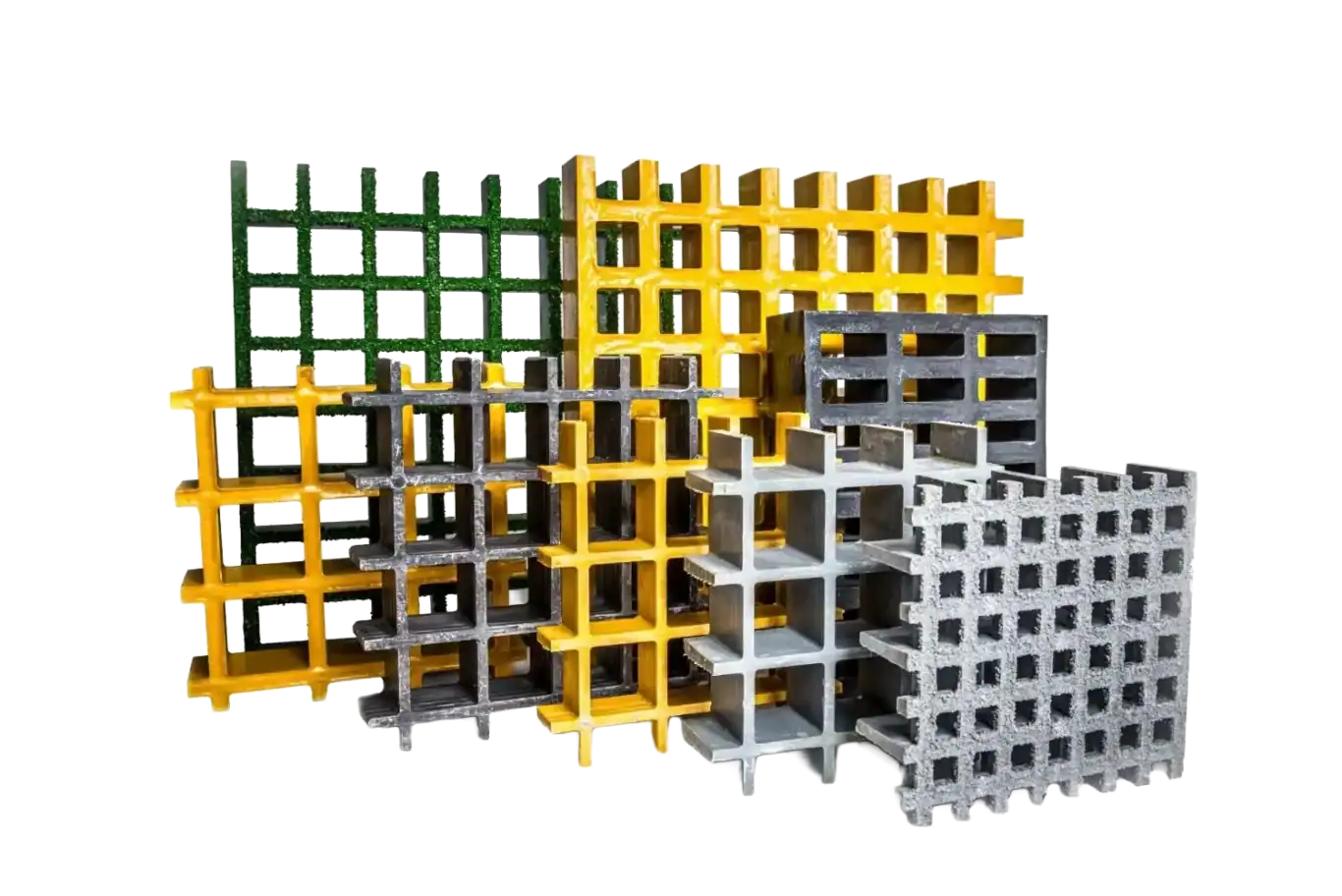
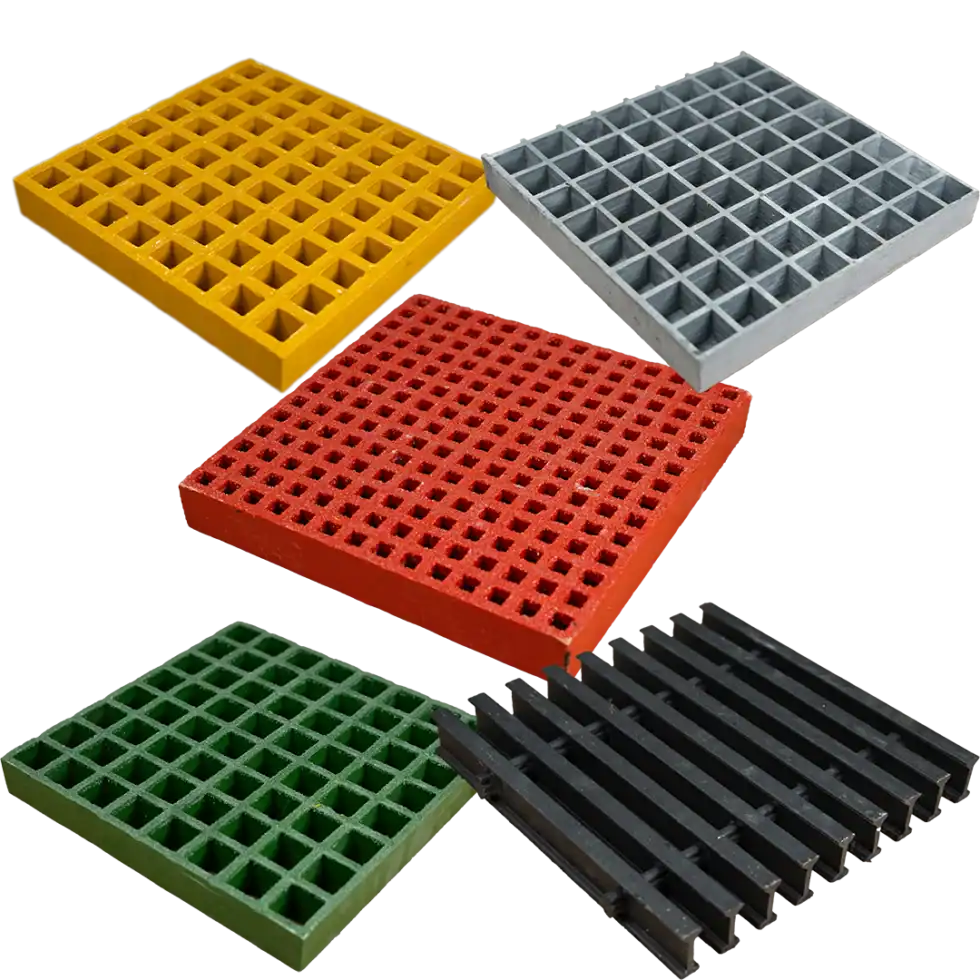
GRP means glass-reinforced plastic. Glass fibres provide reinforcement, while the resin binds them together and contributes to resistance in the operating environment. Grating can be moulded as an integrated grid or assembled from pultruded load-bearing profiles. These methods result in different properties and support requirements.
Four product groups for different duties
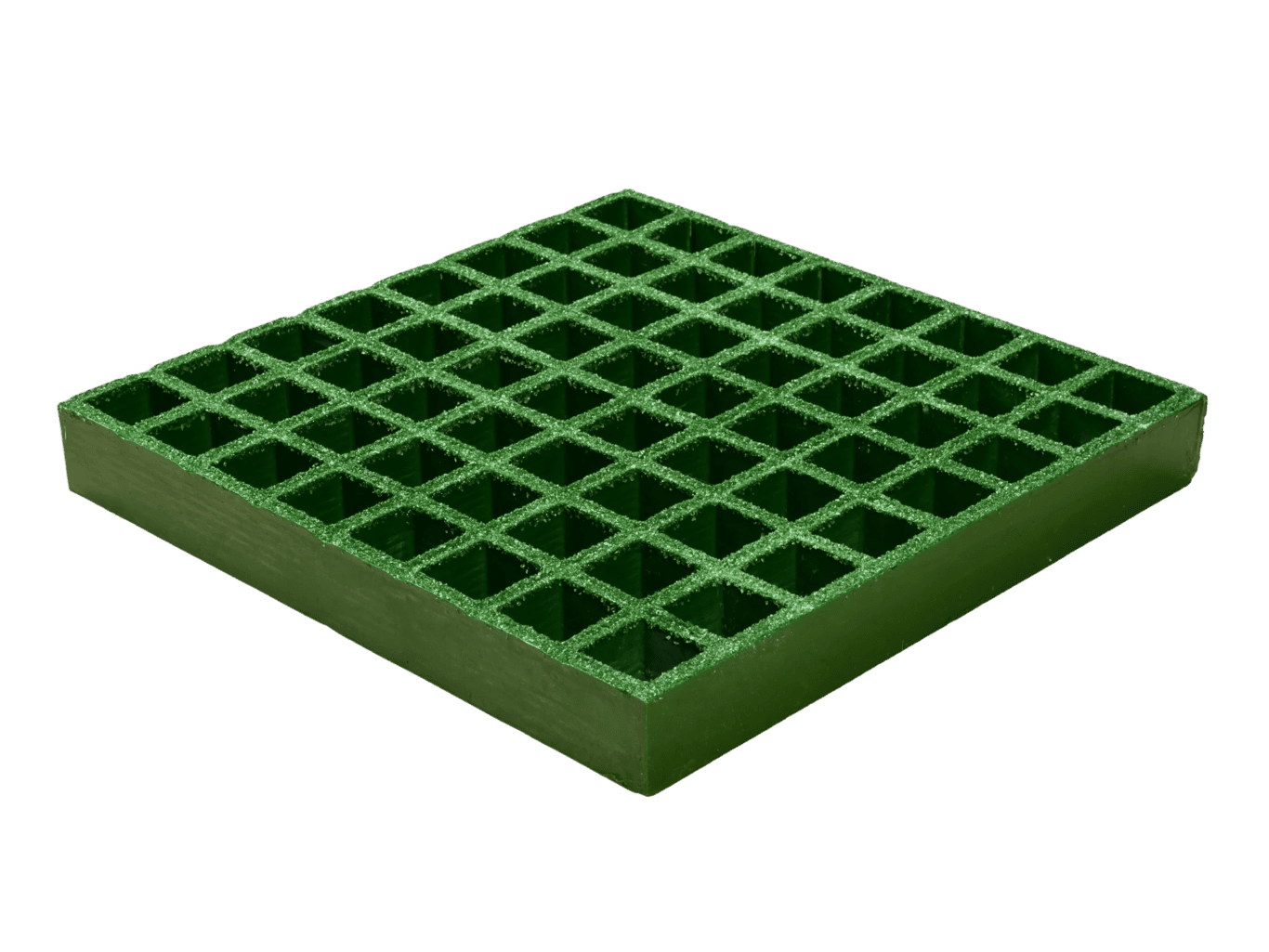
Moulded grating
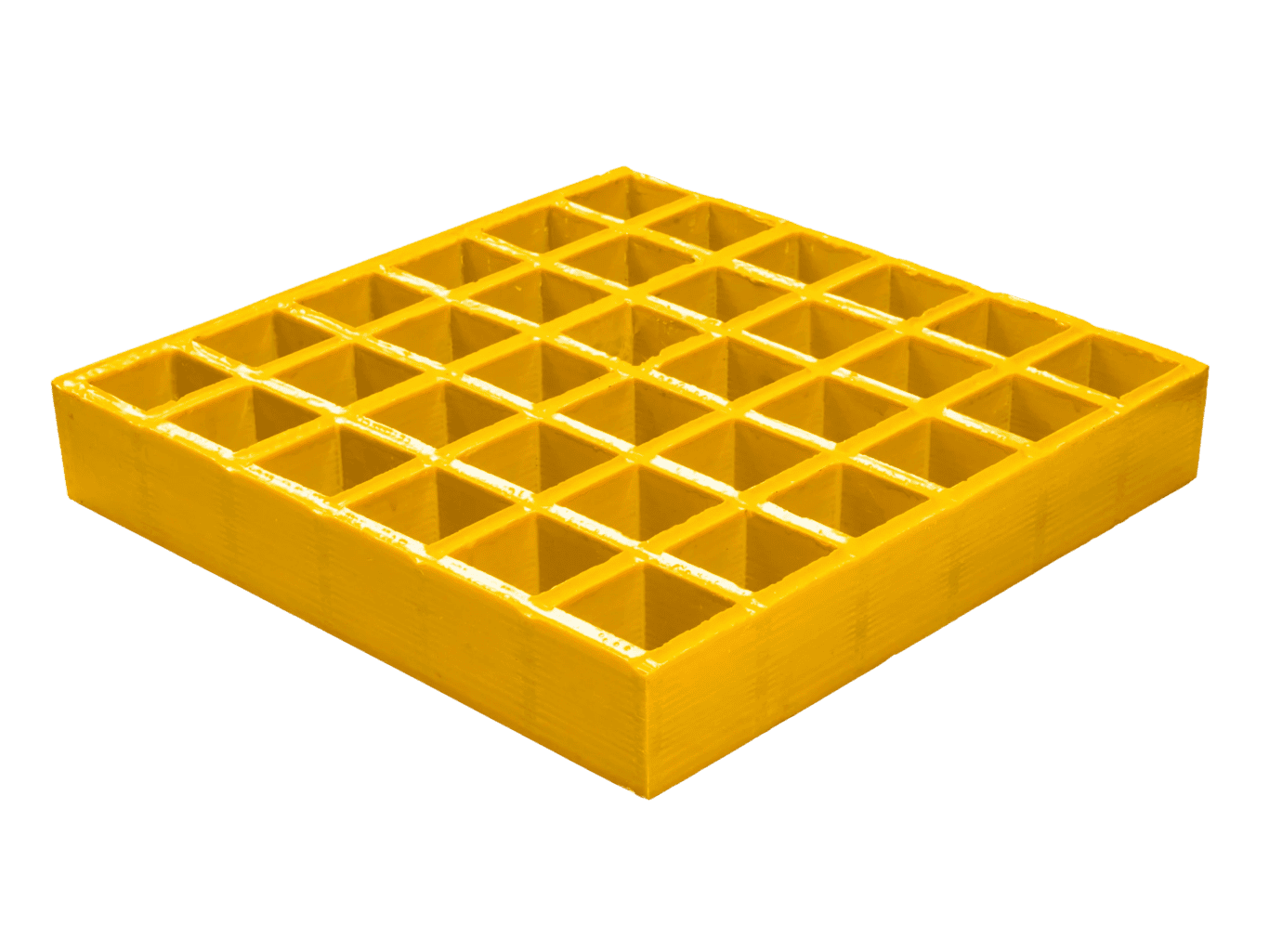
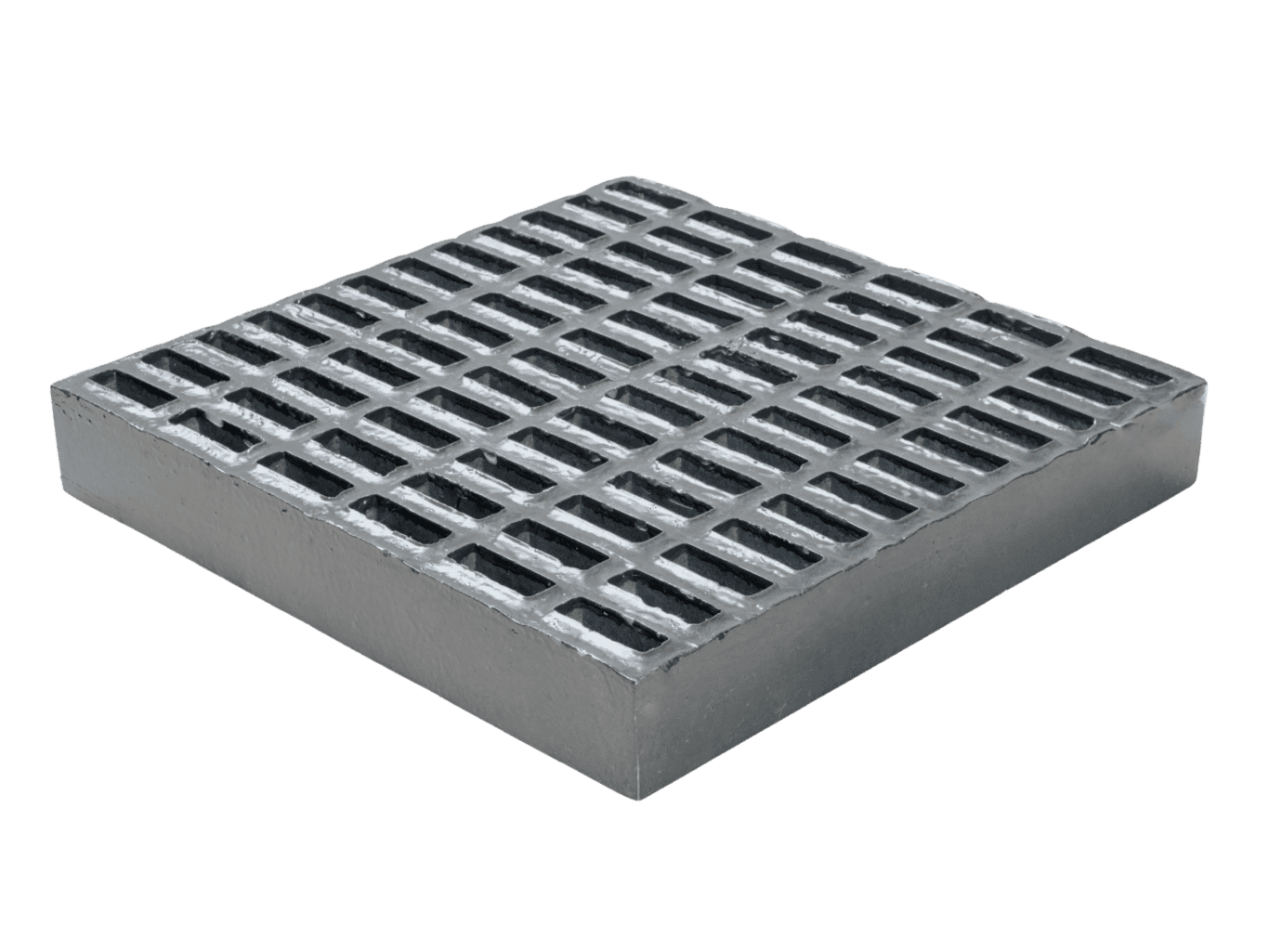
Fibres are placed in several directions in a mould and combined with resin. Capacity in each direction depends on the geometry and material construction; equal strength must not be assumed for every pattern. Moulded panels suit many walkway and platform applications. Cut-outs around equipment require planned support details.
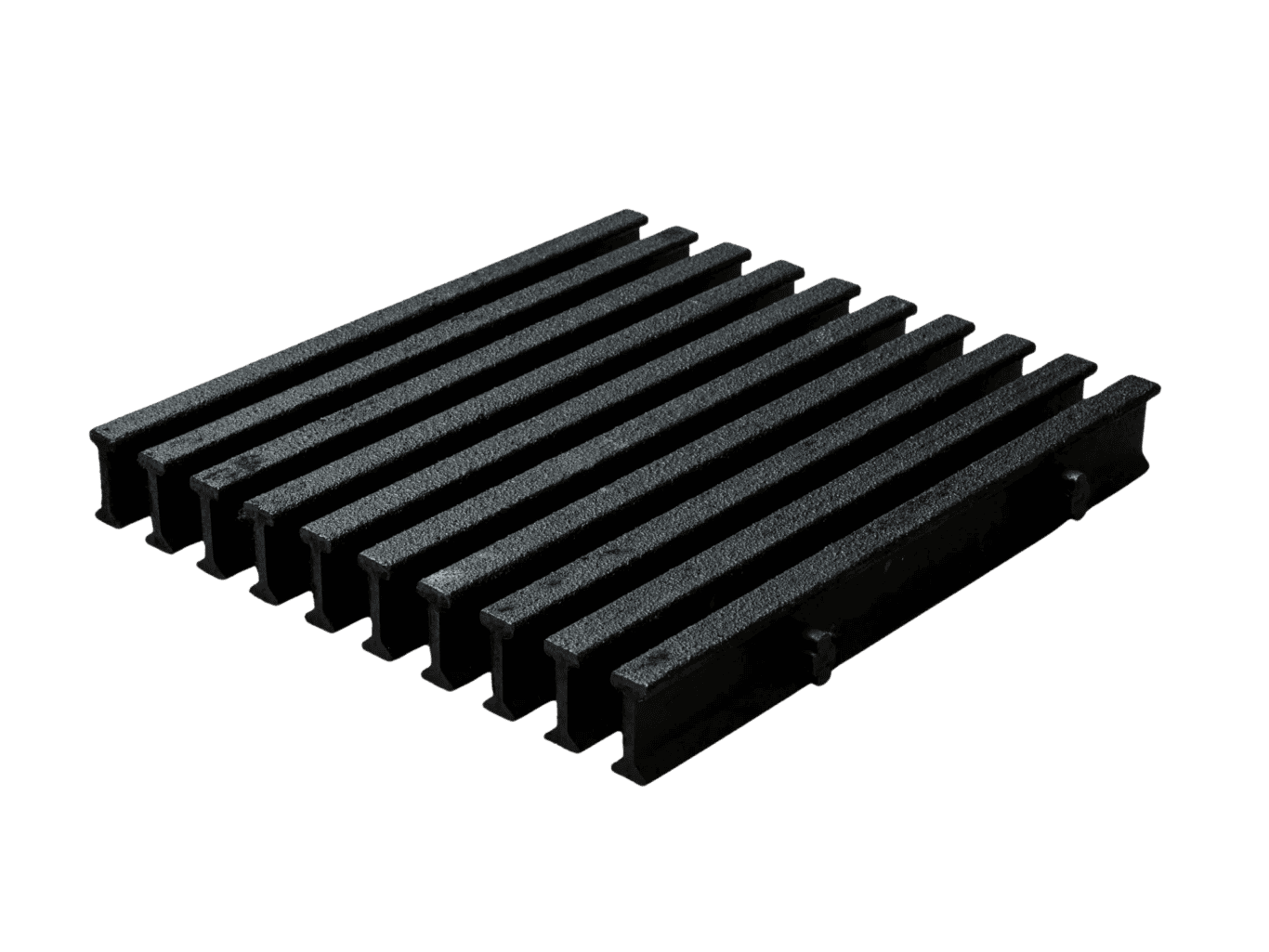
Pultruded grating
Longitudinal bearing profiles are made by pultrusion and connected by transverse components. The main load is carried in the bearing-bar direction. Correct span orientation and support are therefore essential. This construction can be relevant where stiffness and span are key considerations.
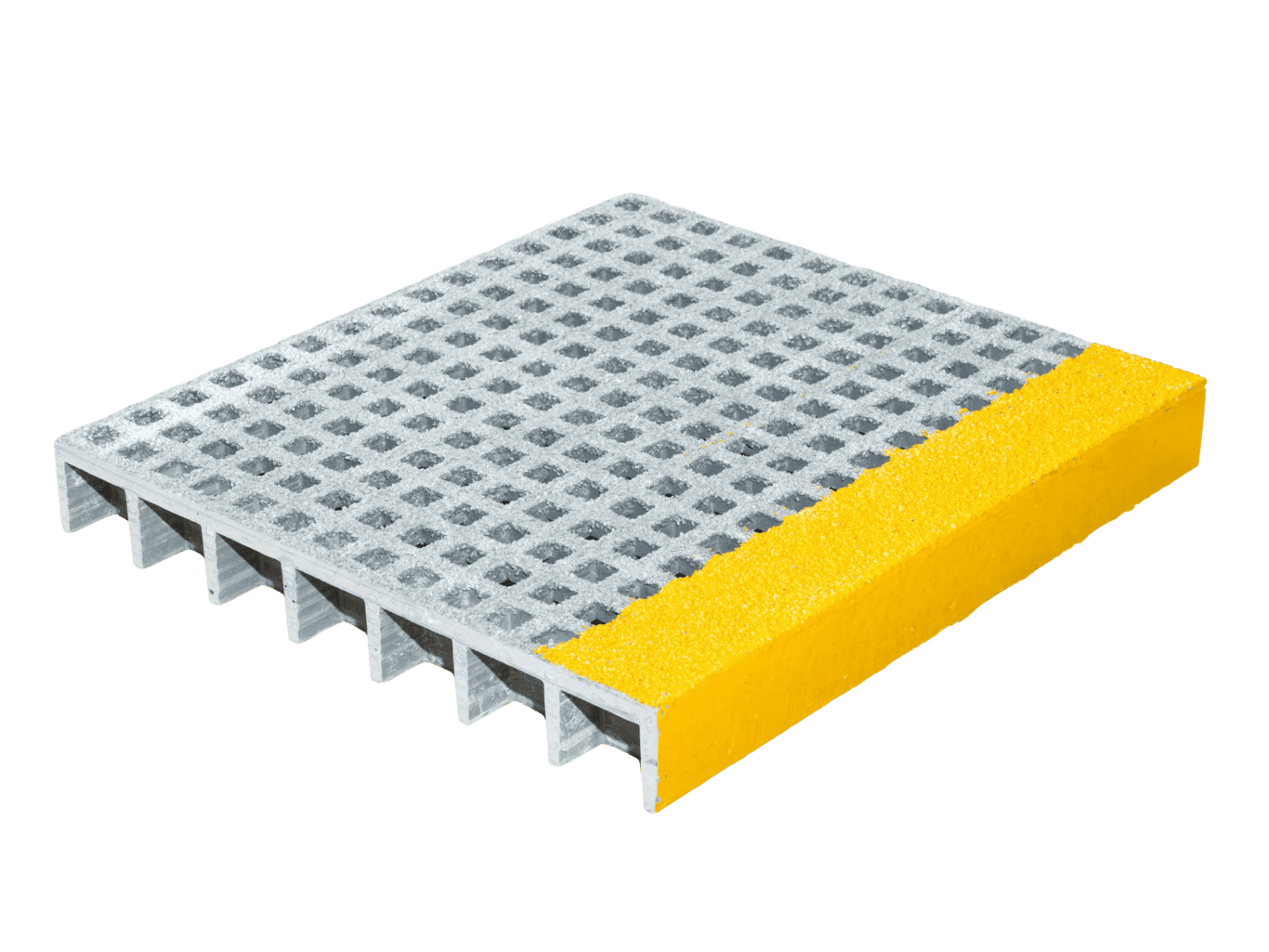
Stair treads
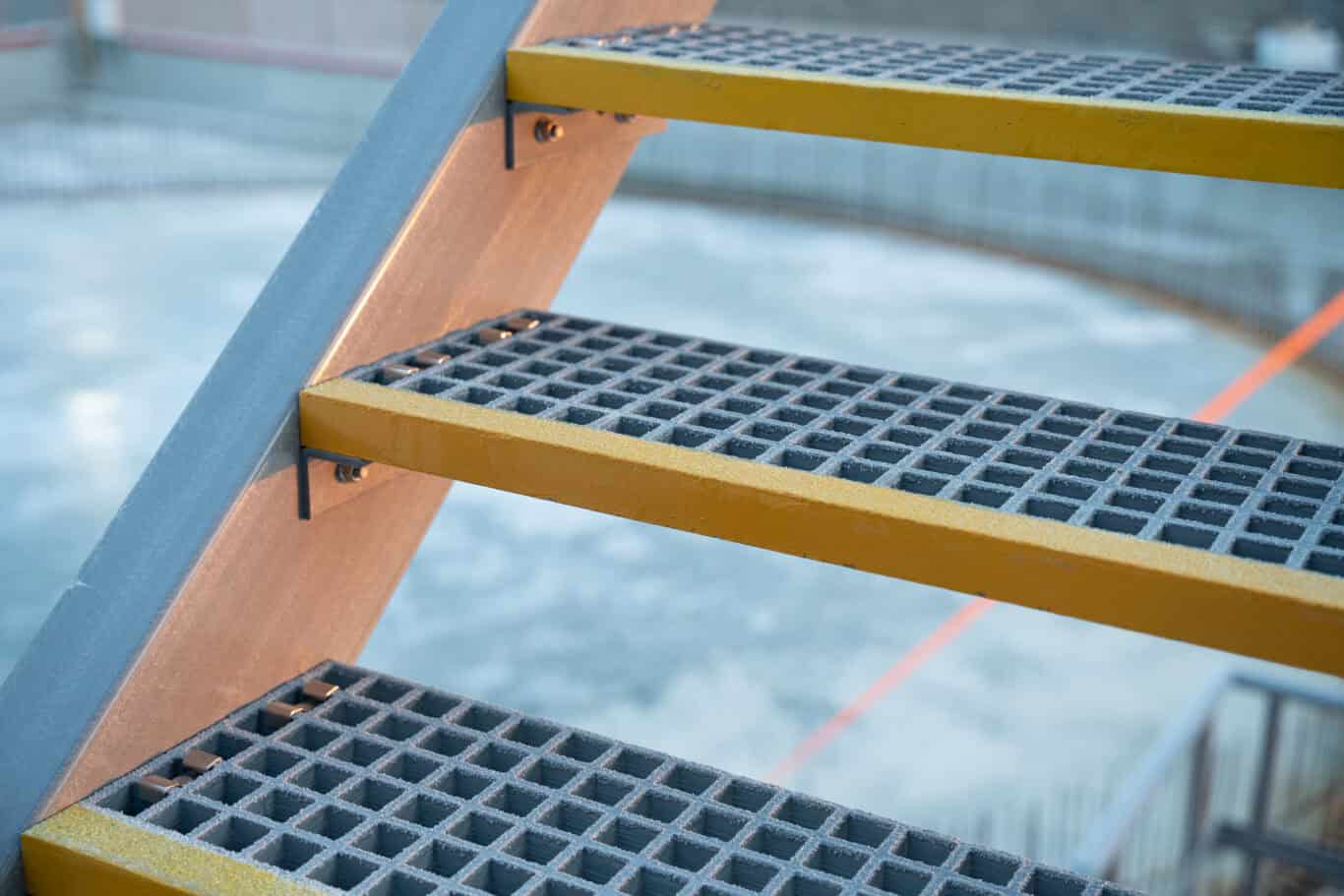
Stair treads are designed for use and loading on stairs. Nosing, slip resistance, visibility and connections are important. A cut section of grating is not automatically a documented stair tread; choose a product intended for the application.
Heavy-duty grating
Heavy-duty grating is developed for higher loads. Wheel and axle loads, contact area, travel direction, dynamic effects and supports require assessment. The description “heavy-duty” does not mean that every panel is suitable for every vehicle or span.
Explore heavy-duty grating →
How to use the load calculator
Start with a free distance between the supports and how the load acts. On the product pages, you will find a calculator where you enter the free span and load, and select the load type. Uniformly distributed load is specified in kg/m² and line load in kg/m. The two describe different situations and cannot be used interchangeably.
The calculator shows indicative deflection assessed against L/200. Deflection alone is not documentation of sufficient load-bearing capacity, and the result is not an approval of the installation. Use the calculator for the correct item, span direction, and load case, and clarify cutouts and fasteners. For critical or special loads, please contact us.
Select resin for the exposure and documented requirements
Polyester, vinyl ester and phenolic systems are used for different purposes. Suitability depends on the specific formulation, chemicals, concentrations, temperature and exposure time. Fire and smoke performance must be documented for the product; it cannot be inferred from colour or a general material description.
Surface finish and openings
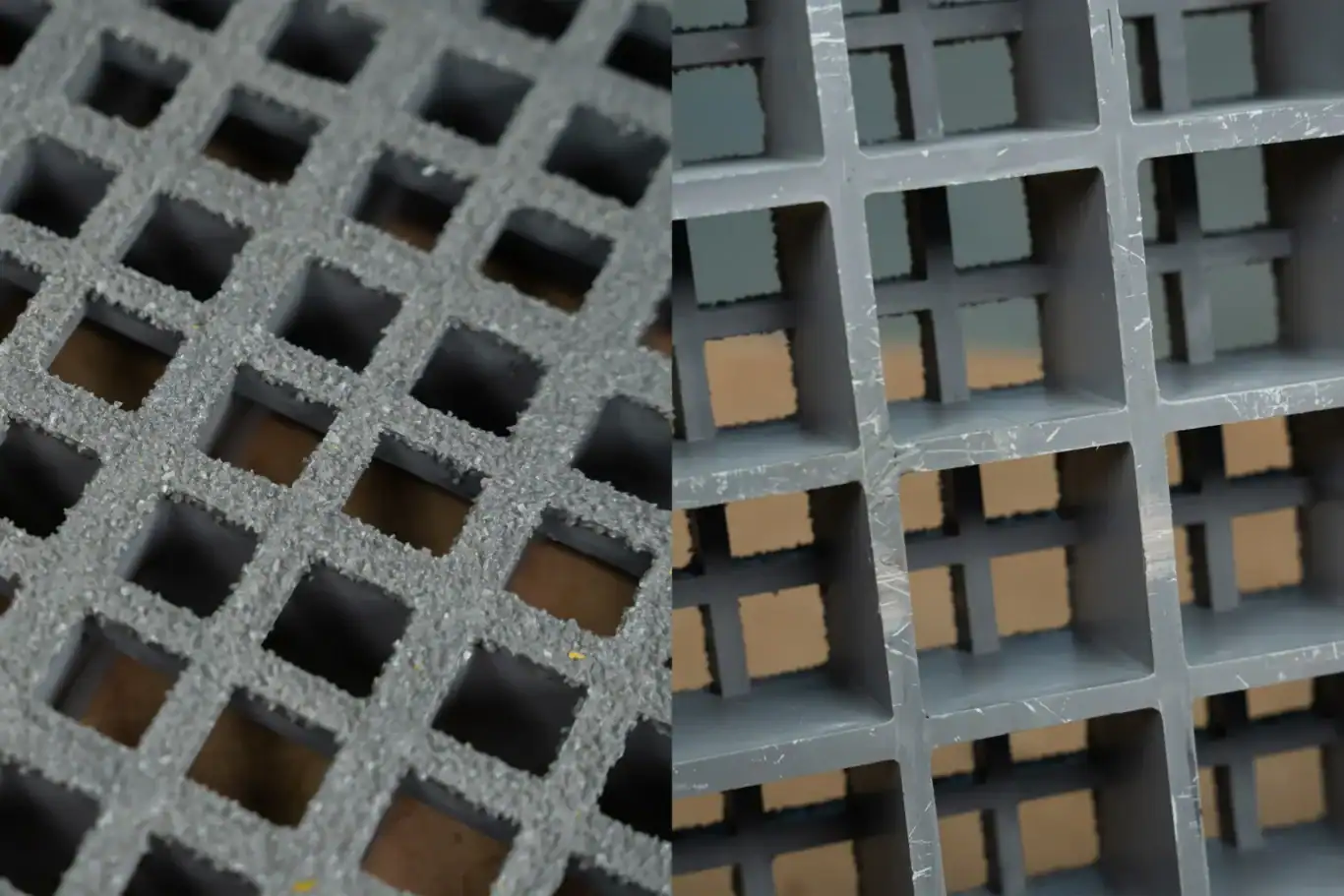
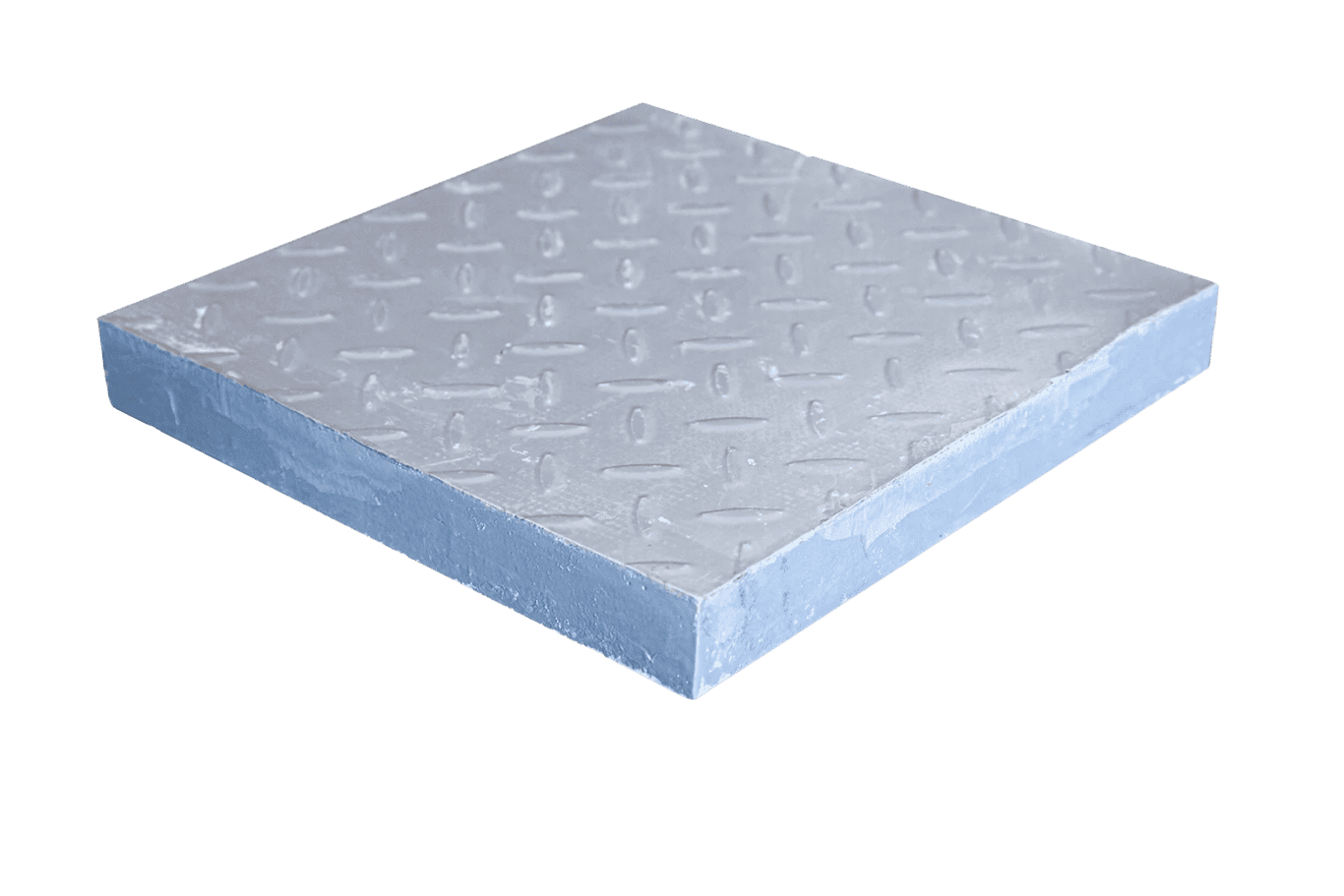
Gritted or concave surfaces can provide grip, but contamination, wear and cleaning affect performance. Opening size must suit pedestrian use, falling-object risks, drainage and cleaning. Covered grating can limit objects or liquids passing through the panel. Liquid retention also requires suitable joints, edges and penetrations.
From panel to installed walking surface
- Establish the use, loads and support arrangement.
- Select the grating type and documented material system.
- Plan surfaces, cut-outs, panel layout and fixings.
- Check installation details, inspection access and cleaning needs.
Glassfiber Produkter can help with product selection and fabrication. Provide dimensions, load assumptions and exposure conditions when requesting an assessment.